
Biodiversity Institute & Natural History Museum
We study past and present life on Earth to educate, engage and inspire.
Holiday Hours
The KU Natural History Museum will be closed on Christmas Day but will be open with special holiday hours during the university's winter recess. The museum will resume normal business hours on January 2, 2026.
- Dec. 26 — Open from noon to 5 p.m.
- Dec. 27 & 28— Open regular hours
- Dec. 29 - Jan. 1— Closed
Natural History Museum
Museum Hours & Admission
Tuesday-Saturday: 9am-5pm
Sunday: 12pm-4pm
Closed on Mondays
Admission is a suggested contribution of $7 per adult and $4 per child. KU students and members are free. All proceeds support the museum.
Sunday: 12pm-4pm
Closed on Mondays
Admission is a suggested contribution of $7 per adult and $4 per child. KU students and members are free. All proceeds support the museum.
Location & Contact Info
Dyche Hall
1345 Jayhawk Blvd
Lawrence, KS 66045
Phone: 785-864-4450
Email: biodiversity@ku.edu
1345 Jayhawk Blvd
Lawrence, KS 66045
Phone: 785-864-4450
Email: biodiversity@ku.edu
Membership
Support the KU Natural History Museum with a Museum Membership and enjoy benefits at the museum and at 300+ institutions around the country!
Panorama Newsletter
Keep up with the latest news, events, and more by subscribing to the Panorama Newsletter, a monthly email from the KU Biodiversity Institute and Natural History Museum.
Natural History Museum
The KU Natural History Museum is home to four floors of public exhibits including the historic Panorama, live snakes and insects, vertebrate and invertebrate fossils, flora and fauna of the Great Plains and more.

Biodiversity Institute
The KU Biodiversity Institute is an internationally recognized center for research and graduate student education in evolutionary biology, systematics and biodiversity informatics, with curated collections of over 11 million plant, animal and fossil specimens and 2 million cultural artifacts.

Upcoming Events

Help Fund our Future
The KU Biodiversity Institute and Natural History Museum relies on your support to fund its programs, research, exhibits and more.
Education & Outreach

K-12 School Programs

KU Student & Faculty Programs

Scout Programs
News

A clerical error caused misidentification of frog specimen that once stood for an entire species
Researchers at the University of Kansas Biodiversity Institute and Natural History Museum recently uncovered a slipup from decades ago: the misidentification of a poison frog specimen from Peru used as a holotype.

Willadsen places in Top 3 at the 2025 ESA Annual Meeting
EEB Graduate Student Peter Willadsen received second place in the SysEB, Evolution and Systematics session of the graduate poster competition at the Entomological Society of America 2025 Annual Meeting in Portland, Oregon. Willadsen’s poster was titled, "Untangling the evolutionary history of the water scavenger beetle subfamily Enochrinae (Coleoptera: Hydrophilidae)". Willadsen is a PhD Student in Dr. Rob Moyle’s lab, Department of Ecology and Evolutionary Biology (EEB), at KU.
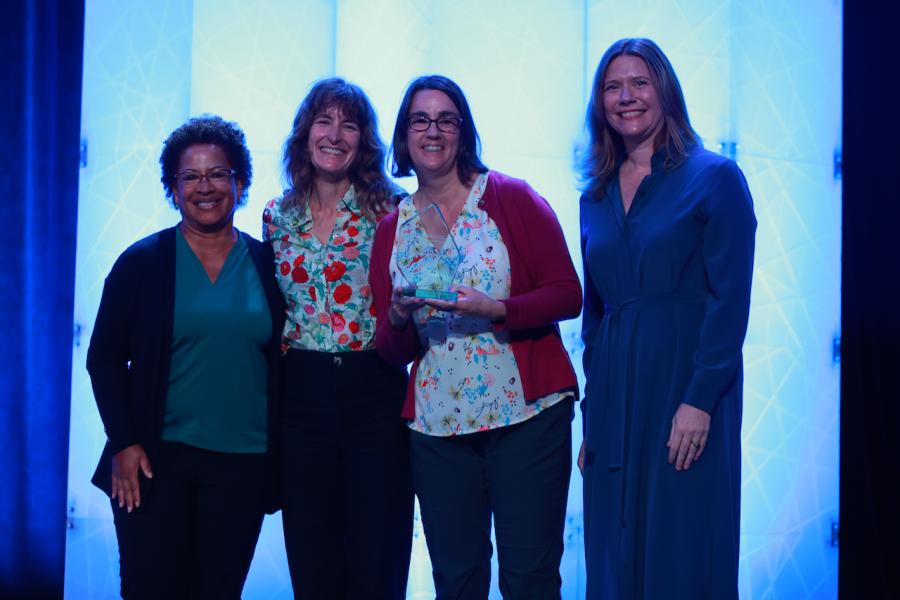
KU Natural History Museum’s VENOMventure wins Leading Edge Award at ASTC conference
VENOMventure, a bilingual STEM-themed experience developed by the University of Kansas Natural History Museum, was honored with a 2025 Roy L. Shafer Leading Edge Award at the Association of Science and Technology Centers (ASTC) conference in San Francisco.
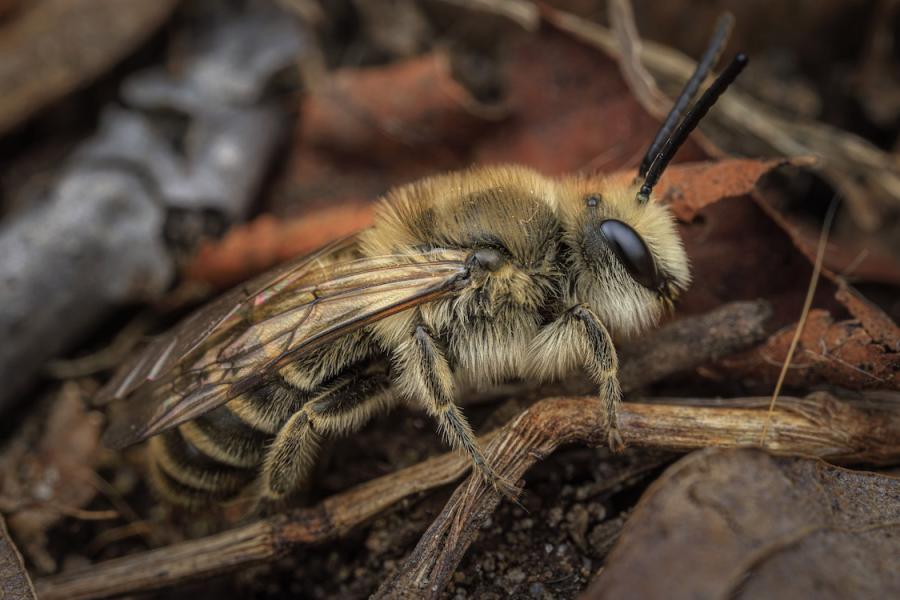
Study: Cellophane bees are built for chill temperatures, more so than honeybees
Scholarship from the University of Kansas shows the cellophane bee is specialized by evolution to handle the harsh shocks and cold temperatures of early spring.